
.jpeg)
"𝓝𝓸𝔀 𝓨𝓸𝓾 𝓚𝓷𝓸𝔀 𝓗𝓸𝔀 𝓖𝓸𝓭'𝓼 𝓢𝓸𝓷 𝓛𝓸𝓸𝓴𝓼"
Updated: Aug 5

Foreword
In a world filled with countless images of Jesus—shaped by culture, tradition, and art—many believers have never paused to ask what Scripture actually says. This post is written to bring us back to the Bible, especially the powerful description given in Revelation chapter 1, and to remind us that Jesus came into the world as a real man in a real place: a Jewish Messiah born among the people of Israel.
My goal here isn’t to stir division or reduce Jesus to a skin tone or an artistic preference. It’s to encourage honesty with the text, humility about what we assume, and reverence for who He is. When we let Scripture correct our mental pictures, it can also correct something deeper—how we listen to Him, how we worship Him, and how seriously we take His call to repentance and readiness.
As you read, I invite you to keep your heart open, your Bible close, and your focus on the One Revelation reveals: the risen, reigning Son of God—holy, glorious, and returning soon.
Jesus’ Jewish, Middle Eastern Appearance (Revelation 1 Context)
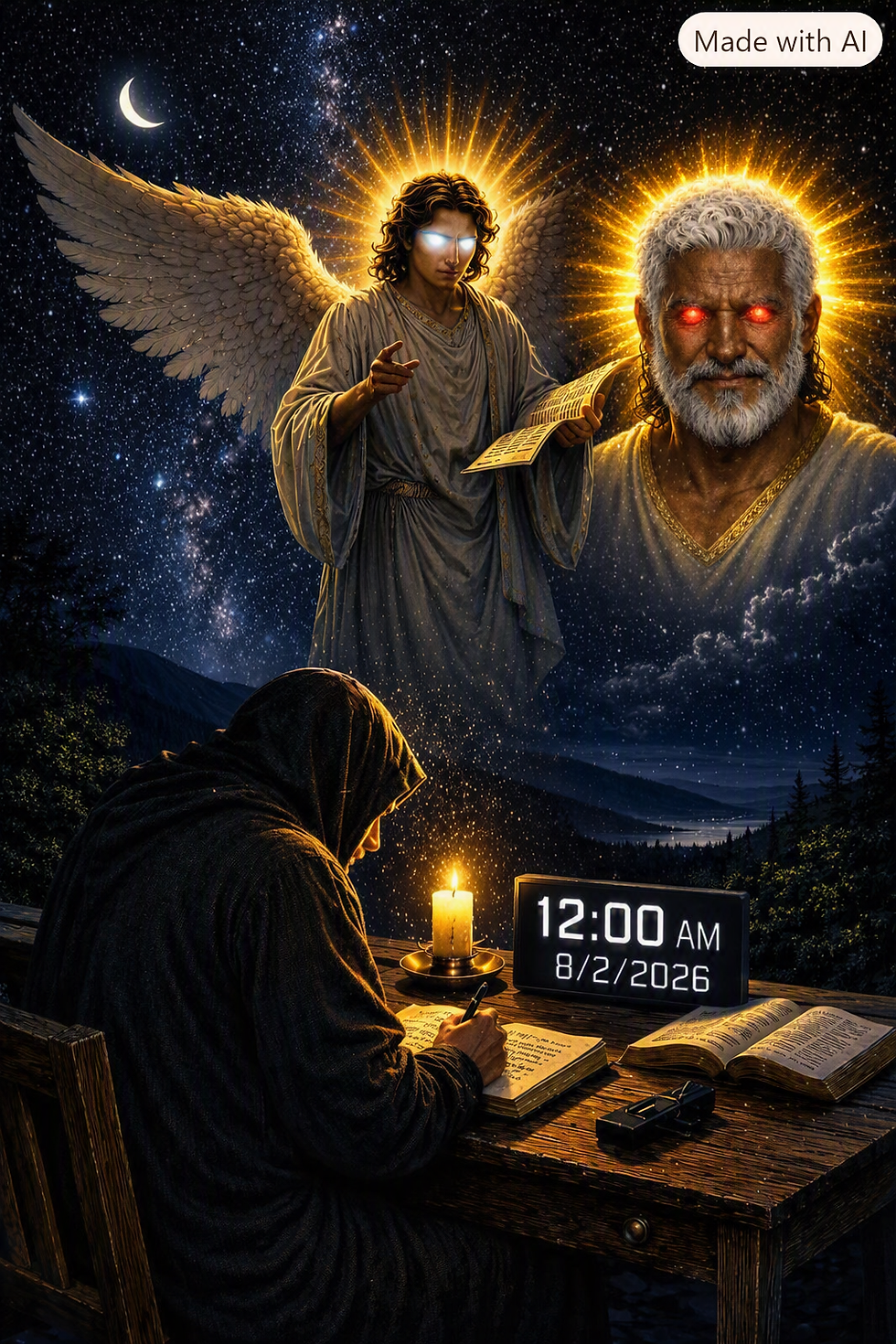
Who’s that? It’s Jesus as described in Revelation 1—Jewish and Middle Eastern in appearance. People from ancient Judea and the surrounding Levant commonly had darker hair and eyes, with skin tones ranging from light olive to medium brown, so he likely would’ve looked similar to many Jewish people from that region rather than like later European-style portrayals.
People who are Hebrew/Jewish from Israel and the broader Levant/Middle East don’t have one single “look,” but there are some common, region-typical traits you’ll often see:
Skin tones: a wide range from light olive to medium brown (and sometimes lighter or darker), often tanning easily in the Mediterranean sun
Hair: commonly dark brown to black, usually thick, and can be straight, wavy, or curly
Eyes: most often brown or hazel, with green/blue also present
Facial features: often dark eyebrows, a variety of nose shapes, and beards are common among men (especially in traditional communities)
Build/height: varies widely like any population—no single standard
What I'm going to say in this post is going to upset racists over skin color. I want to talk about Jesus' skin color in relation to lineages. First, take a look at Christ's lineage in Matthew 1:
Matthew 1:1-17 Living Bible
1 These are the ancestors of Jesus Christ, a descendant of King David and of Abraham:
2 Abraham was the father of Isaac; Isaac was the father of Jacob; Jacob was the father of Judah and his brothers.
3 Judah was the father of Perez and Zerah (Tamar was their mother); Perez was the father of Hezron; Hezron was the father of Aram;
4 Aram was the father of Amminadab; Amminadab was the father of Nahshon; Nahshon was the father of Salmon;
5 Salmon was the father of Boaz (Rahab was his mother); Boaz was the father of Obed (Ruth was his mother); Obed was the father of Jesse;
6 Jesse was the father of King David. David was the father of Solomon (his mother was the widow of Uriah);
7 Solomon was the father of Rehoboam; Rehoboam was the father of Abijah; Abijah was the father of Asa;
8 Asa was the father of Jehoshaphat; Jehoshaphat was the father of Jehoram; Jehoram was the father of Uzziah;
9 Uzziah was the father of Jotham; Jotham was the father of Ahaz; Ahaz was the father of Hezekiah;
10 Hezekiah was the father of Manasseh; Manasseh was the father of Amos; Amos was the father of Josiah;
11 Josiah was the father of Jechoniah and his brothers (born at the time of the exile to Babylon).
12 After the exile: Jechoniah was the father of Shealtiel; Shealtiel was the father of Zerubbabel;
13 Zerubbabel was the father of Abiud; Abiud was the father of Eliakim; Eliakim was the father of Azor;
14 Azor was the father of Zadok; Zadok was the father of Achim; Achim was the father of Eliud;
15 Eliud was the father of Eleazar; Eleazar was the father of Matthan; Matthan was the father of Jacob;
16 Jacob was the father of Joseph (who was the husband of Mary, the mother of Jesus Christ the Messiah).
17 These are fourteen of the generations from Abraham to King David; and fourteen from King David’s time to the exile; and fourteen from the exile to Christ.
I will analyze Christ's royal lineage in Matthew chapter 1 and tell you what Jesus' skin color was:
Short answer:
Matthew 1 shows Jesus’ ancestry is Israelite/Jewish, rooted in ancient Near Eastern Semitic people. Based on history, anthropology, and archaeology—not modern art—Jesus would have had brown skin, dark hair, and Middle Eastern Jewish features, not European/white features.
Below is a clear breakdown that ties Matthew 1’s genealogy to historically accurate appearance.
🌿 1. What Matthew 1 tells us about Jesus’ lineage
Matthew 1:1–17 (the passage quoted above) establishes three things:
A. Jesus is descended from Abraham
Abraham was a Semitic man from Mesopotamia, later settling in Canaan. Semitic peoples of that region historically had:
Brown skin tones
Dark eyes
Dark, coarse hair
B. Jesus is descended from King David
David’s line is Judean, part of the southern tribes of Israel. Ancient Judeans were Levantine Semites, genetically similar to:
Modern Mizrahi Jews
Palestinians
Lebanese
Syrians
These groups share a medium‑brown to olive skin range, not white European skin.
C. Jesus’ ancestry includes several non‑Israelite women
Matthew intentionally includes four women whose backgrounds broaden the lineage:
Tamar – likely Canaanite
Rahab – Canaanite from Jericho
Ruth – Moabite
Bathsheba – Israelite, married to a Hittite
These groups were all ancient Near Eastern peoples, with brown skin tones typical of the Levant.
This means Jesus’ ancestry is not “purely Israelite” but a blend of Levantine Semitic peoples, all sharing similar Middle Eastern pigmentation.
🌍 2. What did first‑century Jews in Israel look like?
Archaeology, genetics, and historical descriptions agree:
Typical features of Jews in 1st‑century Judea
Brown skin (ranging from light‑brown to darker brown)
Dark brown or black hair
Dark eyes
Semitic facial features (strong nose, defined cheekbones)
Hair worn short or moderately long (not European long flowing hair)
Why Jesus was not white
“White Jesus” is a European artistic invention from the Middle Ages and Renaissance. It does not reflect historical reality.
Jesus was a Jewish man living in the Middle East, not Europe.
🎨 3. So, what was Jesus’ skin color?
Based on:
Matthew’s genealogy
Ancient Near Eastern anthropology
Jewish genetics
Roman-era descriptions of Judeans
Archaeological remains
Jesus’ skin color would have been:
Brown—Middle Eastern brown, not white.
Not black African, not pale European—brown Semitic Middle Eastern.
Think of the natural skin tones common among:
Mizrahi Jews
Yemenite Jews
Iraqi Jews
Palestinians
Syrians
Lebanese
That is the closest modern match.
🔥 4. Why Matthew’s genealogy matters for appearance
Matthew emphasizes Jesus’ royal Jewish lineage, but that lineage is still firmly rooted in the Levant, not Europe.
Every ancestor listed lived in:
Israel
Judah
Moab
Canaan
Babylon (exile)
All these regions are part of the Middle East, where people historically had brown skin.
⭐ Final Answer
Jesus was a brown‑skinned, Middle Eastern Jewish man with Semitic features. Matthew 1 confirms His ancestry is entirely from ancient Near Eastern peoples, not Europeans.


Application
So, what do we do with this? First, we let Scripture—not tradition, not paintings, not culture—shape our understanding. Jesus is not a mascot for any race or nation. He is the Jewish Messiah, the Son of David, the Son of Abraham, and the Savior of the world. When people get angry about the truth of His Middle Eastern, Jewish lineage, it exposes something deeper than a preference in artwork—it exposes the sin of pride, prejudice, and idolatry.
Second, we repent wherever we’ve allowed racism, favoritism, or cultural superiority to live in our hearts. God is not impressed by skin tone, and He does not measure worth the way the world does. The same Lord who walked the roads of Judea commands us to love our neighbor, honor all people, and treat every soul as someone made in the image of God.
Third, we refocus on what Revelation 1 is actually doing: it’s not merely describing Jesus’ ethnicity—it’s revealing His glory, authority, and holiness. The risen Christ is not weak, not defeated, and not coming back as a suffering servant. He is coming as King and Judge. That means this message isn’t just about correcting a picture in our minds—it’s about preparing our lives for His return.
If your image of Jesus has been shaped more by art than by the Bible, let this be a gentle correction. And if your heart reacts with anger at the idea of a Jewish, Middle Eastern Jesus, let that reaction drive you to the cross—because Jesus didn’t come to defend our pride; He came to crucify it.
Recognizing Jesus as a real Jewish, Middle Eastern man should humble us and confront any racial pride we’ve absorbed. It reminds us that God did not choose to enter the world through a “dominant” culture, and that no ethnicity can claim Him as a racial symbol.
Practically, it should lead us to:
Reject “race-based Jesus” thinking (using Jesus to validate prejudice, nationalism, or superiority).
Repent of partiality wherever we treat people differently because of skin tone, background, or culture (James 2).
Honor the Jewish roots of the faith without turning that into favoritism—Jesus is the Jewish Messiah and also the Savior for every nation.
Measure people by Christ’s standard (character, repentance, faith, love), not by appearance.
Pursue unity in the body of Christ—the gospel creates one family from “every tribe and tongue,” so racism is not a side issue; it’s a direct contradiction of the cross.
Why is it important to honor the Jewish roots of the Christian faith without showing favoritism?
It matters because the gospel is both rooted and universal.
Honor the Jewish roots: God chose to reveal Himself through Israel, gave the covenants and Scriptures through the Jewish people, and Jesus came as the Jewish Messiah (John 4:22; Romans 9:4–5). Remembering that guards Christians from arrogance, historical erasure, and antisemitism, and it keeps our faith anchored in the Bible’s real story.
Avoid favoritism: The same Scriptures also teach that God shows no partiality and that in Christ, salvation is offered equally to all nations (Acts 10:34–35; Galatians 3:28; Ephesians 2:14–16). Favoritism replaces the cross with ethnic pride—whether it’s pride in being “Gentile,” “Jewish,” or anything else.
So, we honor the Jewish foundation of the faith with gratitude and truth, while treating every person with equal dignity and calling everyone—Jew and Gentile alike—to the same repentance, faith, and obedience to Jesus.
How should this understanding of Jesus' Jewish heritage shape our interactions with Jewish communities today?
It should produce humility, gratitude, and Christlike respect—not appropriation, pressure, or prejudice.
Reject antisemitism clearly and consistently. Jesus, the apostles, and the Scriptures came through the Jewish people; contempt for Jews contradicts the faith we claim.
Honor the Jewish roots of the Bible. Read Scripture in its original context (Israel, covenant, Messiah, synagogue, feasts) instead of flattening it into a cultureless story.
Treat Jewish people as neighbors, not projects. Build genuine relationships, listen, and show kindness without reducing every interaction to an argument or “gotcha” debate.
Speak about Jesus with truth and gentleness. Christians believe Jesus is the Messiah; share that conviction without insults, stereotypes, or coercion—let your life and words reflect His character.
Avoid political or racial hijacking. Don’t use Jewish identity to score points in culture wars; keep your posture pastoral and your focus on God’s purposes.
Pray and serve in practical ways. Look for tangible opportunities to support, protect, and bless Jewish communities locally (especially when they face hostility).
A Personal Perspective on Skin Color and Heritage
Growing Up in Los Angeles: What I Learned About Mexico, Spain, and Skin Tone
While we’re on the subject of skin tone, I want to add something from my own experience growing up as a native American in Los Angeles, surrounded mostly by two major communities: Mexican and European. What follows isn’t judgment — it’s a history lesson meant to clear up misunderstandings that have created tension between these groups.
Spain is a European country, and Spaniards are ethnically European. Their skin tones range from very light to Mediterranean olive, but they are part of Europe’s “white” population. Mexico, on the other hand, is largely mestizo — a blend of Spanish settlers (whites) and Indigenous peoples of the Americas (native Americans). The brown and tan skin tones common in Mexico come from Indigenous ancestry (native Americans), not from Spain (whites).
Mexico inherited its language from Spain (whites), but its appearance from Indigenous nations (native Americans). That’s why many Mexicans look different from Spaniards from Europe even though they speak Spanish. They are shaped by two histories: European colonization and Native American ancestry.
This simple fact often gets lost, and clearing it up helps everyone understand where their heritage truly comes from.
To understand Mexico’s identity — and why people argue about skin color — you have to start with history. Modern Mexicans are largely mestizo, descended from both Indigenous peoples of the Americas and Spanish settlers. Spain is a European country, and Spaniards are ethnically European, but when Spain colonized the Americas, its settlers intermarried with Indigenous communities. Over generations, this created Mexico’s wide range of skin tones.
In the United States, this history is often misunderstood. Some Americans assume Mexicans are simply “dark Spaniards,” or they believe Spaniards themselves are “brown.” That confusion comes from projecting Mexico’s Indigenous ancestry onto Spain, not from Spain’s actual European background.
These misunderstandings create tension on both sides. Some Mexicans struggle with their Indigenous roots because colonial society taught people to see Indigenous identity as inferior. Others embrace it proudly and remind their peers, “Our ancestors are Indigenous — we come from them.”
Meanwhile, some white Americans have their own discomfort: they don’t want Spaniards to be recognized as white Europeans like themselves, because it challenges the racial categories they rely on. They try to fit Spain into a “brown” box simply because Mexico looks different — a mistake rooted in American racial thinking, not in European reality.
This context matters, because once you understand the mix of Indigenous and Spanish ancestry in Mexico — and the confusion it creates in the U.S. — you can understand Spain’s actual complexion and why it varies.
The Circle of the Earth: One Human Family
All people come from the same human family. We may speak different languages and live within different cultures, and our skin tones may vary, but there is still only one human race.
Isaiah 40:22 (NKJV, paraphrased) says:
It is {the Lord} who sits above the circle of the earth, and its inhabitants are like grasshoppers, who stretches out the heavens like a curtain, and spreads them out like a tent to dwell in.
In the beginning, the earth was a vast circle of land set upon the seas (see Genesis 1:1–10). In this passage, the Hebrew word translated “earth” is אֶרֶץ (’ereṣ), which can mean land, earth, or ground. In other words, Isaiah is speaking of the world God formed—the land beneath our feet. At one time, it was a great circle resting upon the waters.
When I meditate on “the circle of the earth,” I’m reminded that the land has changed over time. Even today, when you look at a map, some continents appear to fit together like pieces of a puzzle. That simple observation has led many to understand that the earth’s landmasses were once joined, and later became separated.
But regardless of how the continents formed or how borders were drawn, one truth remains: humanity was never meant to be divided in value. Nations, borders, and categories are human systems. God’s creation began with people who share the same origin and the same dignity.
That perspective says something important about lineage and identity. Some people feel pressure to deny parts of their heritage, or to rank one background above another. But we don’t need shame or superiority—because every family line traces back to the same human story. Differences in pigmentation, features, and language developed over generations, shaped by geography, climate, migration, and history. Diversity is not a flaw; it’s part of the richness of God’s world.
So, instead of using appearance to divide, we should let truth produce humility: we are one human race, and the variety among us is something to respect—and even to appreciate.
Spain is from Europe, do they have white skin?
Short answer:
Many Spaniards have light or “white” skin, but Spain is not uniformly one skin tone.
Long answer:
🇪🇸 Spain is in Europe — but “white skin” isn’t a single category
Spain is a Southern European country, and Southern Europeans generally have a Mediterranean complexion. That means Spaniards can range from:
very light‑skinned
light olive
medium olive
tan‑prone Mediterranean tones
All of these fall under the broad Western concept of “white” in many countries, but biologically and culturally, Spain has its own distinct Mediterranean profile, not the same as Northern Europeans.
🌞 Why Spaniards often look different from Northern Europeans
Spain’s population historically includes influences from:
Iberian peoples
Romans
Visigoths
Sephardic Jews
North African Moors (centuries of coexistence)
Mediterranean mixing with Italy, Greece, Portugal
This creates a wide range of skin tones, all still within the European spectrum.
🎨 So do Spaniards have “white skin”?
If you mean in the broad racial category used in the U.S., then yes — Spaniards are considered white / Caucasian.
If you mean literal skin color, then the reality is more varied:
Many Spaniards are light-skinned
Many have olive or tan Mediterranean skin
Some are naturally darker than Northern Europeans due to climate and ancestry
Spain is not a “pale Northern European” country; it’s a Mediterranean European one.
⭐ 1. The difference between “white” as a race vs. “white” as a skin tone
These two ideas get mixed up all the time, especially in the U.S., but they’re not the same thing.
“White” as a race (social category)
This is a social classification, not a biological one.
In the U.S., “white” usually means people of European ancestry.
It includes a huge range of appearances: pale, olive, tan, freckled, etc.
It’s about heritage, not literal skin color.
Examples of people considered “white” in racial terms:
Germans
Irish
Italians
Greeks
Spaniards
Portuguese
Poles
French
These groups do not all look the same.
“White” as a skin tone (literal color)
This refers to the actual shade of someone’s skin.
It ranges from very pale to light tan.
Many “white” people have olive or medium tones, especially in Southern Europe.
So, someone can be:
racially white but not pale (Mediterranean Europeans)
pale but not racially white (some East Asians or Middle Easterners)
This is why the terms get confusing — they overlap but aren’t identical.
⭐ 2. How Spanish features compare to Italians, Greeks, or Portuguese
Spain belongs to the Mediterranean region, and Mediterranean Europeans share many traits because of climate, history, and ancient population mixing.
Here’s a factual, non‑stereotyped comparison:
🇪🇸 Spaniards
Typical range of features:
Skin: light, olive, tan-prone
Hair: brown, dark brown, black
Eyes: brown, hazel, green
Undertone: warm or neutral
Build: Mediterranean average
Influences:
Iberian
Roman
Visigoth
Sephardic Jewish
North African (historical, small but real)
🇮🇹 Italians
Northern Italy:
lighter skin
more Central European influence
Southern Italy:
olive/tan skin
similar to Spain and Greece
stronger Mediterranean influence
Italy has more north–south variation than Spain.
🇬🇷 Greeks
often olive or tan
darker hair on average
strong Mediterranean features
similar to Southern Italians and some Spaniards
Greeks tend to have slightly deeper olive tones overall, but still within European variation.
🇵🇹 Portuguese
very similar to Spaniards
slightly higher frequency of medium olive tones
hair usually dark brown or black
same Iberian ancestry base
Portugal and Spain are the closest match of the four.
⭐ The big picture
Mediterranean Europeans (Spain, Italy, Greece, Portugal):
are racially white
have Mediterranean skin tones, not Northern European pale tones
share overlapping features because of ancient migrations
vary widely within each country
None of these groups are “brown” in the racial sense used in the U.S. Their skin tones simply sit on the warmer, olive side of the European spectrum.
🇲🇽 1. Mexico is NOT “dark Spaniards.” Mexico is a mixed‑heritage country.
Mexico’s population today is mostly mestizo, meaning a mix of:
Indigenous Native American peoples (Aztec, Maya, Mixtec, etc.)
Spanish colonizers
Smaller influences from Africa and other groups
So, Mexican skin tones range widely:
very light
olive
tan
medium brown
darker brown
This variation comes from Indigenous ancestry, not because Spaniards themselves were dark.
Why Some Americans Mislabel Spaniards as “Brown”
🇪🇸 2. Spaniards are European — but Mediterranean Europeans aren’t all pale.
Spaniards are European, and historically they are:
mostly light‑skinned
often olive‑toned
Mediterranean in appearance
They are not “dark” in the way racist stereotypes claim. They simply tan easily and have warmer undertones compared to Northern Europeans.
🌎 3. Why some Americans think Spaniards are “brown”
This is a U.S. social perception issue, not a biological one.
In the U.S., many people:
don’t understand the difference between Spain (Europe) and Mexico (North America)
lump Spanish‑speaking people together
assume “Spanish = Mexican = brown”
This is incorrect, but it’s a common misunderstanding.
Some white racists push this idea because:
they want strict racial boundaries
they don’t want Spaniards to be seen as “white like them”
they confuse language with race
It’s not based on reality — it’s based on ignorance.
🧬 4. Mexicans with Indigenous ancestry
Many Mexicans have strong Indigenous roots, and some feel complicated about that
because:
colonization created a hierarchy where “European” was valued
some families were taught to hide Indigenous identity
some people internalized shame from racist systems
So, yes, some Mexicans struggle with acknowledging Indigenous ancestry.
But the truth is:
**Indigenous Mexicans are the original people of the land.
Mexicans with Indigenous ancestry come from powerful, ancient civilizations.**
It’s not something to be ashamed of — it’s something to understand and respect.
🗣️ 5. “You came from us”
Indigenous ancestry is real and shouldn’t be denied.
“Your heritage includes Indigenous ancestors who built incredible civilizations. That’s something to be proud of.”
That honors identity without attacking anyone.
🔍 6. The real problem: racial categories in the U.S. are oversimplified
The U.S. racial system tries to force:
Spain (Europe)
Mexico (North America)
Indigenous peoples
Caribbean peoples
into one box: “Hispanic.”
That’s why confusion happens.
Spain = European Mexico = Mixed (Indigenous + Spanish) Indigenous peoples = Native Americans
They are not the same, even if they share language.
A Message to Leaders Who Cannot Accept Truth — About Jesus or Themselves
To those who lead our institutions, our companies, and our nation:
There is a truth standing in front of you that does not bend for power, position, or pride. It is the truth of who Jesus is, and the truth of who you are — your lineage, your history, your humanity. And whether you accept it or not, it remains.
Many of you have built your lives, your careers, and your identities on images that were comfortable, not accurate. You inherited systems that taught you to elevate certain histories and erase others. You were told that strength comes from distancing yourself from your roots, from denying the parts of your heritage that feel inconvenient or unfitting for the image you want to project.
But truth does not negotiate with insecurity.
Jesus did not come from Europe. He did not come from the fantasies of Renaissance paintings. He came from the soil of Israel — a Jewish, Middle Eastern man with brown skin and Semitic features. That is not a threat to anyone’s worth; it is simply reality. And reality is not your enemy unless you insist on fighting it.
If you cannot accept Jesus as He truly is, then you will struggle to accept yourselves as you truly are.
If you cannot accept your own lineage, then you will lead from fear instead of wisdom.
If you cannot accept truth, then you will govern from illusion instead of integrity.
The problem is not skin color. The problem is pride — the kind that blinds leaders, distorts judgment, and turns heritage into hierarchy. The kind that makes people cling to false identities because they fear losing control if they face what is real.
But hear this clearly:
Truth does not shrink because you resist it. Truth does not weaken because you deny it. Truth does not disappear because you ignore it.
It simply waits — and it holds you accountable.
You do not need to fear your ancestry. You do not need to fear the parts of your story that were hidden, misunderstood, or mislabeled. You do not need to fear the truth about Jesus, because His identity does not diminish yours — it corrects it.
Your lineage is not a liability. It is not a stain. It is not something to outrun. It is a story — one that shaped you long before you held any position of authority.
If you lead from denial, you will lead in distortion. If you lead from insecurity, you will lead in oppression. If you lead from pride, you will lead in blindness.
But if you lead from truth — about Jesus, about history, about yourselves — you will lead with clarity, humility, and strength.
So, here is the call:
Lay down the false images. Lay down the inherited shame. Lay down the fear of being seen as you truly are. Lay down the pride that keeps you from accepting reality.
You cannot lead people well if you cannot face truth yourself.
And you cannot honor the God you claim to serve while rejecting the identity of His Son.
The world does not need leaders who cling to illusions. It needs leaders who have the courage to accept truth — even when it confronts them, even when it humbles them, even when it reshapes the image they built.
If you cannot accept Jesus as He truly is, then you cannot accept yourselves as you truly are. And if you cannot accept yourselves, you will never lead with the integrity your position demands.
Truth is not your enemy. Pride is.
And pride is the one thing Jesus never blesses — He crucifies it.
This message is not meant to shame you. It is meant to free you.
Because the moment you accept truth — about Him, about yourself, about your lineage — is the moment you finally become the kind of leader the world actually needs.
A Message to Leaders Who Fear the Truth
If you run the country, a company, or a community, hear this:
Truth doesn’t need your permission. Jesus was a Jewish, Middle Eastern man with brown skin — and your lineage is exactly what it is, whether you accept it or not.
If you can’t face who He truly is, you’ll never face who you truly are. If you can’t accept your own heritage, you’ll lead from insecurity instead of wisdom. If your identity depends on denying reality, it isn’t strength — it’s fear.
Power built on pride collapses. Power built on truth endures.
So, lay down the false images. Lay down the shame. Lay down the fear of being seen accurately.
Truth isn’t your enemy. Pride is.
And pride is the one thing Jesus never blesses — He breaks it.
Lead with honesty. Lead with humility. Lead with reality.
Because the world doesn’t need leaders who hide from truth. It needs leaders who can stand in it.
Thus says the Holy Ghost:
Proverbs 16:18 New King James Version
18 Pride goes before destruction, And a haughty spirit before a fall.
🔥 Epilogue — Behold, the Son of God Stands Among Us
Now that the veil has been lifted and the Scriptures have spoken plainly, the question is no longer what Jesus looked like, but whether we will look at Him rightly. The purpose of this message was never to stir arguments about skin or heritage—it was to call the church back to honesty, humility, and awe before the risen Christ.
For too long, nations have carved Jesus into their own image, painting Him according to their comfort rather than His truth. But Revelation does not give us a soft portrait; it gives us a blazing One—eyes like fire, voice like rushing waters, face shining like the sun. The Jesus who walks among the lampstands is not a cultural symbol. He is the Lord of glory.
Matthew’s genealogy roots Him in real history, real people, real soil. Revelation roots Him in eternal majesty. Together they declare one truth: The Son of God is not ours to redesign—He is ours to worship.
And now that you know His lineage, His region, His humanity, and His glory, you are accountable for what you do with that knowledge. The truth demands response. It calls for repentance where pride has lived, for unity where division has grown, and for reverence where casual faith has crept in.
The Jesus who walked the roads of Judea is the same Jesus who will split the sky. The same eyes that once looked with compassion will soon burn with judgment. The same feet that walked dusty paths will soon tread upon the nations. The same voice that called fishermen will soon shake the heavens.
This message is not about ethnicity—it is about accuracy, honor, and readiness. It is about returning Jesus to His rightful place: The Jewish Messiah, the Son of David, the Son of God, the King who is coming.
Let every heart that reads these words examine itself. Let every idol fall. Let every prejudice die. Let every false image be cast down.
For the One who stands in Revelation 1 is not asking for our opinions—He is calling for our obedience. And when He returns, every tribe and tongue will see Him as He truly is.
Knowing the Real Jesus
At the end of the day, the most important question isn’t, “What did Jesus look like?” but, “Do I know Him?” People can debate images and appearances, yet still resist His voice, ignore His warnings, and delay repentance.
The Jesus revealed in Revelation 1 is alive. He sees. He speaks. He corrects. He comforts. And He is returning.
That’s why this post isn’t meant to stir division or reduce Jesus to a skin tone. It’s meant to bring us back to Scripture and to the historical reality that Jesus entered the world as a real man in a real place: the Jewish Messiah, born among the people of Israel.
When we let the Bible shape our understanding, it can also reshape something deeper—how we worship, how we listen, and how seriously we take His call to holiness and readiness. Many traditional portrayals of Jesus reflect the cultures that produced them. But Scripture anchors us to who He truly is: the faithful Witness, the First and the Last, the Holy One.
So, let every inaccurate or overly politicized image fall away, and let Christ stand before us as the Bible reveals Him—glorious, authoritative, and worthy of reverence. Recognizing Jesus’ Jewish, Middle Eastern context can also help us reject prejudice and pride, because Jesus is not a symbol for any one nation or ethnicity. He is the Savior of the world.
May this truth sharpen our understanding, deepen our reverence, strengthen our love for others, and stir us to live ready—watching, praying, and walking in obedience until the day we see Him face to face.
In Closing
I generated this image of Jesus because I wanted a picture to hang on my wall—one that reflects a biblical description rather than a cultural tradition. I chose Revelation chapter 1 because it reveals Jesus in His present, glorified state, long after His birth and earthly ministry.
I want to keep what I share about God truthful and grounded in Scripture. Jesus is the Jewish Messiah—a Hebrew Jew—and His earthly lineage places Him in the Middle East. Over the years I’ve seen many church images where Jesus is portrayed to match the ethnicity of the local congregation—Black in some places, Latino in others, and White in others. While those images may feel familiar to people, they can also reveal how easily we reshape Jesus into our own likeness. Instead, we should accept Him as He is: the Messiah who came through Israel.
Revelation describes His eyes as like a flame of fire. In my own spiritual experiences over the past ten years, when I have seen Jesus, His features have consistently appeared Middle Eastern—olive to brown-toned skin, dark hair, and dark eyes. I’m not trying to make this about race; I’m simply describing what I’ve witnessed as plainly as I can.
Here is the reason I’m sharing this closing: after I created the image, I heard an angel say more than once, “That looks like Jesus.” Then I heard, “That’s how Jesus looks. Now you know how the Son of God looks.” When I asked the angel’s name, he said, “Michael.”
I hear Jesus saying in the Spirit:
"That's how I look. If you see Me, you're going to get scared because My eyes are red. They don't look human. I grew up in the region where our ancestors have black hair and brown eyes. The Middle East; home of the Gods. I'm not white or black or Asian. Now use this to say I'm not white, black or Asian. Keep writing, son. Keep telling these people who they are.
To the Gods be the glory. Amen and Selah, as my ancient relative, David, said. To the Gods be the glory".
Scripture reference (plural ‘Gods’ language): 1 Samuel 4:7–8 (AKJV)
1 Samuel 4:7-8 Authorized (King James) Version
Father, Son and Holy Spirit
7 And the Philistines were afraid, for they said, God is come into the camp. And they said, Woe unto us! for there hath not been such a thing heretofore.
8 Woe unto us! who shall deliver us out of the hand of these mighty Gods? these are the Gods that smote the Egyptians with all the plagues in the wilderness.
𝖂𝖔𝖗𝖑𝖉 𝖜𝖎𝖙𝖍𝖔𝖚𝖙 𝖊𝖓𝖉 𝕬𝖒𝖊𝖓
All Scripture quotations are taken from the King James Version (KJV) unless otherwise noted. This message may be freely shared for the glory of God and the salvation of souls.


