

✦ 𝓦𝓱𝓸 𝓐𝓻𝓮 𝓣𝓱𝓮 𝓔𝓵𝓮𝓬𝓽 𝓘𝓷 𝓜𝓪𝓽𝓽𝓱𝓮𝔀 24:31?
Updated: Oct 4
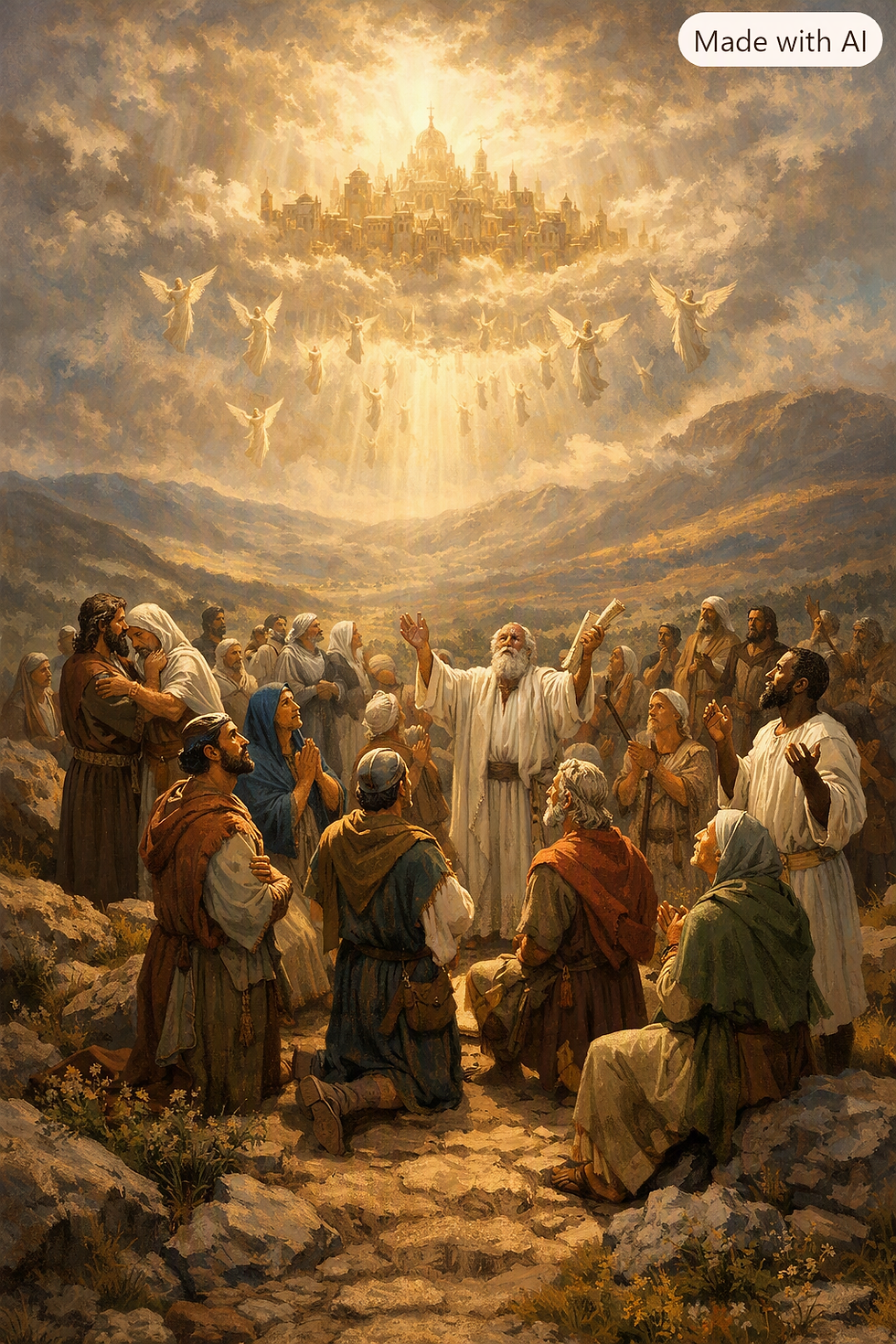
Foreword
The identity of “the elect” in Matthew 24:31 is closely connected to the timing of Christ’s return, the resurrection of the saints, and the gathering of God’s people. For this reason, this study examines not only the biblical meaning of the elect, but also the major differences between pre-tribulation and post-tribulation interpretations.
Matthew 24:29–31 describes a sequence of events: tribulation, cosmic signs, the visible appearing of the Son of Man, and the gathering of the elect by angels with a great trumpet. These verses must therefore be considered alongside 1 Thessalonians 4:16–17, 1 Corinthians 15:51–52, 2 Thessalonians 2:1–4, and Revelation 19–20.
This study presents the pre-tribulation and post-tribulation positions as they are commonly understood, then compares their claims with the language and order of Scripture. Particular attention is given to the number and timing of Christ’s comings, the resurrection, the trumpet call, the gathering of the elect, the Church’s relationship to Israel, and the millennial kingdom.
The purpose is not to dismiss sincere believers who hold a different interpretation, but to encourage careful examination of the biblical text. May this study help readers distinguish between what Scripture clearly states and what is inferred from a theological system. Above all, may it direct our hearts toward Jesus Christ—the chosen and precious One who will return openly, gather His people, defeat His enemies, and reign forever.
Who Are the Elect in Matthew 24:31? A Biblical Scripture Study
The Elect: God’s People Gathered at Christ’s Return
The elect refers to all of God’s redeemed people. This includes the Church and repentant believers from Israel. However, Scripture also identifies certain exceptions, including Judas—the “son of perdition” (John 17:12)—and those who were raised when Jesus died (Matthew 27:52–53).
Some believe that “the elect” in Matthew 24:31 refers exclusively to Israel, whom Jesus will save at His return. While repentant Israel is certainly included among God’s people, unbelieving Israelites who reject Christ before His return will not be raptured or raised in the first resurrection. This study will examine these distinctions in greater detail.
Let’s examine every Scripture passage that refers to “the elect” to determine whether Matthew 24:31 is describing those who are raptured and raised in the first resurrection.
I will search the web and biblical resources to collect every scripture referencing the elect, especially those relevant to Matthew 24:31, and compile them for study.
Gathering every scripture on “the elect” is the right way to demonstrate that Matthew 24:31’s elect = the resurrected + raptured saints. I will compile all occurrences, categorize them (OT vs NT, Israel vs Church, prophetic vs doctrinal), and show how the New Testament consistently uses “the elect” to refer to believers who are saved, resurrected, preserved, and gathered by Christ — exactly what Matthew 24:31 describes.
I'll gather all the key scriptures about the elect for this study, starting with Matthew 24:31 and expanding across both Testaments!
I will research Matthew 24:31 context and theological significance, compile and organize all scriptures into a comprehensive study reference.
Here is the complete Bible study reference on The Elect — organized by theme, with Matthew 24:31 as the anchor passage.
📖 Scripture Study: The Elect
Anchor Verse — Matthew 24:31 (NASB)
"And He will send out His angels with a loud trumpet call, and they will gather His elect from the four winds, from one end of the heavens to the other."
Key Greek Word: eklektos (ἐκλεκτός, Strong's G1588) — "select, chosen, favorite" — appears 23 times in the New Testament. The verb root is eklegomai (ἐκλέγομαι) — "to choose out, select."
The Historic Faith
The Historic Faith. Eklektos Meaning — “elect” | Strong's G1588 Concordance
⚓ The Anchor Passage in Full Context (Matthew 24 — Olivet Discourse)
Verse | Text (ESV/NASB) | Significance |
Matt. 24:22 | "And if those days had not been cut short, no human being would be saved. But for the sake of the elect those days will be cut short." | The Great Tribulation shortened for the elect's protection |
Matt. 24:24 | "For false christs and false prophets will arise and perform great signs and wonders, so as to lead astray, if possible, even the elect." | The elect face deception but cannot ultimately be lost |
Matt. 24:31 | "He will send out His angels with a loud trumpet call, and they will gather His elect from the four winds, from one end of heaven to the other." | The grand gathering — the climax of the Olivet Discourse |
Parallel passage: Mark 13:20, 22, and 27 closely parallels Matthew 24. Verse 27 states:
“And then shall he send his angels, and shall gather together his elect from the four winds, from the uttermost part of the earth to the uttermost part of heaven.”
This passage connects the gathering of the elect with both the earth and heaven, whereas Matthew 24:31 emphasizes the gathering in the sky—the rapture of living believers at Christ’s return. The gathering from the earth points to the first resurrection, when the dead in Christ will rise first. The gathering from heaven refers to the rapture of living saints. Therefore, this passage clearly includes both the resurrection and the rapture on the day Christ returns, rather than referring exclusively to Israel, as pre-tribulationists teach.
🔤 Word Study: What "Gather His Elect" Means
"Gather" (Greek: episynaxousin) — from episynago (ἐπισυνάγω), the same root as synagogue. It implies a covenantal assembly — a vertical and horizontal gathering unto the Lord.
"Four winds" — signifies utter worldwide dispersion; no corner of the earth is excluded.
"From one end of the heavens to the other" — an exhaustive, cosmic scope. No believer, living or dead, is overlooked.
"Loud trumpet call" (salpinx megalē)** — echoes Sinai (Exod. 19:16–19), the Feast of Trumpets, and Paul's "last trumpet" (1 Cor. 15:52). Signals divine victory and royal assembly.
🕎 Old Testament Foundations
God Choosing a People
Verse | Text | Theme |
Gen. 12:1–3 | God calls Abram — father of a chosen nation through whom all nations will be blessed | Covenantal election begins |
Exod. 19:5–6 | "You shall be my treasured possession… a kingdom of priests and a holy nation." | Israel's elect identity established at Sinai |
Deut. 7:6 | "The LORD your God has chosen you to be a people for his treasured possession, out of all the peoples on the face of the earth." | God's sovereign, unconditional choice |
Deut. 14:2 | "The LORD has chosen you to be a people for his treasured possession, out of all the peoples on the face of the earth." | Repetition underscores permanence |
Deut. 30:4 | "Even if your exiles are at the ends of the heavens, from there the LORD your God will gather you." | Direct OT root of Matt. 24:31's global gathering |
Ps. 135:4 | "For the LORD has chosen Jacob for himself, Israel as his own possession." | Election as treasured ownership |
Amos 3:2 | "You only have I chosen among all the families of the earth." | Exclusive covenantal knowledge |
Isaiah's "Elect" Oracles (Hebrew: bāchar — chosen)
Verse | Text | Theme | |
Isa. 41:8–9 | "But you, Israel, my servant, Jacob whom I have chosen… I have chosen you and not rejected you." | Reassurance of permanent election | |
Isa. 42:1 | "Behold my servant, whom I uphold, my chosen, in whom my soul delights." | The Messiah as the ultimate Elect One (cited in Matt. 3:17; 12:18) | |
Isa. 43:10 | "You are my witnesses… and my servant whom I have chosen." | Elect as God's witnesses | |
Isa. 44:1–2 | "Yet hear now, O Jacob my servant, and Israel whom I have chosen… 'Do not fear, O Jacob my servant, and Jeshurun whom I have chosen.'" | Election paired with comfort | |
Isa. 45:4 | "For the sake of my servant Jacob, and Israel my chosen, I call you by your name." | Election extends even to Cyrus — God's sovereign reach | |
Isa. 65:9, 22 | "My chosen shall inherit it… my chosen shall long enjoy the work of their hands." | The elect inherit the new creation | |
Isa. 27:13 | "In that day a great trumpet will be blown, and those who were lost… will come and worship the LORD." | OT trumpet-and-gathering image behind Matt. 24:31 | |
Isa. 11:12 | "He will raise a signal for the nations and will assemble the banished of Israel, and gather the dispersed of Judah from the four corners of the earth." | "Four corners" = Matt. 24:31's "four winds" |
✝️ New Testament — Every Key "Elect" Passage
The Gospels
Verse | Text | Theme |
Matt. 20:16 | "Many are called, but few are chosen." | Election is selective, not universal |
Matt. 22:14 | "Many are called, but few are chosen." | Repeated — the parable of the wedding feast |
Mark 13:20 | "But for the sake of the elect, whom he chose, he shortened the days." | Parallel to Matt. 24:22; adds "whom he chose" |
Mark 13:27 | "He will send out the angels and gather his elect from the four winds." | Parallel to Matt. 24:31 |
Luke 18:7 | "And will not God give justice to his elect, who cry to him day and night?" | The elect cry out; God avenges them |
Luke 23:35 | "If he is the Christ of God, his Chosen One!" | Christ himself called eklektos — the Elect of God |
John 15:16 | "You did not choose me, but I chose you." | Initiative of election rests with God |
Paul's Letters
Verse | Text | Theme | |
Rom. 8:29–30 | "Those he predestined he also called; those he called he also justified; those he justified he also glorified." | The "Golden Chain" of election | |
Rom. 8:33 | "Who shall bring any charge against God's elect? It is God who justifies." | The elect are legally secure — unchargeable | |
Rom. 9:11–13 | "In order that God's purpose of election might stand… 'Jacob I loved, but Esau I hated.'" | Election is not based on works or merit | |
Rom. 11:5–7 | "There is a remnant, chosen by grace… the elect obtained it." | A faithful remnant always preserved | |
Eph. 1:4–5 | "He chose us in him before the foundation of the world… he predestined us for adoption." | Election is pre-creation, in Christ | |
Col. 3:12 | "As God's chosen ones, holy and beloved, put on compassionate hearts…" | Elect identity expressed in holy character | |
1 Thess. 1:4 | "We know, brothers loved by God, that he has chosen you." | Assurance of election given to the church | |
2 Thess. 2:13 | "God chose you as firstfruits to be saved, through sanctification by the Spirit." | Election linked to Spirit's sanctifying work | |
2 Tim. 1:9 | "He saved us… because of his own purpose and grace, given to us before the ages began." | Grace given before time itself | |
2 Tim. 2:10 | "I endure everything for the sake of the elect, that they also may obtain salvation in Christ Jesus." | Paul's mission shaped by the elect | |
Titus 1:1 | "Paul… for the faith of God's elect and their knowledge of the truth." | Paul's apostleship in service of the elect |
Peter & John
Verse | Text | Theme | |
1 Pet. 1:1–2 | "To those who are elect exiles of the Dispersion… according to the foreknowledge of God the Father, in the sanctification of the Spirit." | Elect are pilgrims; election rooted in God's foreknowledge | |
1 Pet. 2:4 | "A living stone… chosen and precious in God's sight." | Christ as the elect cornerstone (Isa. 28:16 fulfillment) | |
1 Pet. 2:6 | "I am laying in Zion a stone, a cornerstone chosen and precious." | The Elect Stone underpins the elect people | |
1 Pet. 2:9 | "But you are a chosen race, a royal priesthood, a holy nation." | Collective elect identity — mirrors Exod. 19:5–6 | |
2 Pet. 1:10 | "Make your calling and election sure." | Election is to be confirmed through holy living | |
2 John 1:1 | "The elder to the elect lady and her children…" | The church addressed as God's "elect lady" | |
2 John 1:13 | "The children of your elect sister greet you." | Sister congregation also called "elect" |
Revelation
Verse | Text | Theme | |
Rev. 7:9–10 | "A great multitude that no one could number, from every nation… standing before the throne." | The gathered elect in their full scope | |
Rev. 17:14 | "The Lamb will conquer them… and those with him are called and chosen and faithful." | The ultimate identity of the redeemed: called + chosen + faithful |
🗂️ Thematic Summary for Study
Theme | Key Verses |
Election before creation | Eph. 1:4–5; 2 Tim. 1:9 |
God's sovereign choice, not merit | Deut. 7:6; Rom. 9:11–13; John 15:16 |
Christ as the ultimate Elect One | Isa. 42:1; Luke 23:35; 1 Pet. 2:4–6 |
The elect protected through tribulation | Matt. 24:22; Mark 13:20; Dan. 12:1 |
The elect cannot be ultimately deceived | Matt. 24:24; Mark 13:22 |
The elect gathered at Christ's return | Matt. 24:31; Mark 13:27; 1 Thess. 4:16–17; 1 Cor. 15:52 |
The elect are legally unchargeable | Rom. 8:33–34 |
The elect's identity and conduct | Col. 3:12; 1 Pet. 2:9; 2 Pet. 1:10 |
The elect cry out and God avenges them | Luke 18:7 |
The elect in final victory | Rev. 17:14; Rev. 7:9–10 |
🔗 Matthew 24:31's Direct Old Testament Roots
These OT passages are the prophetic scaffolding Jesus deliberately invoked:
Deut. 30:4 — "Even from the ends of the heavens He will gather you" — the exact language of Matt. 24:31
Isa. 27:13 — Trumpet blown → scattered ones gathered to Jerusalem
Isa. 11:12 — Gathering from four corners of the earth
Zech. 14:5 — The LORD comes with all His holy ones
Dan. 12:1 — Deliverance for those written in the book at the time of unprecedented trouble
Ps. 50:5 — "Gather to me my faithful ones, who made a covenant with me by sacrifice"
Study Note:
The word eklektos applies to three referents in Scripture:
(1) Christ himself as the supremely Elect One (Isa. 42:1; Luke 23:35; 1 Pet. 2:6),
(2) holy angels (1 Tim. 5:21), and
(3) God's redeemed people — both Israel in the OT and the church in the NT. Matthew 24:31 specifically concerns this third group, gathered at Christ's glorious return after the Great Tribulation.
Israel, the Rapture, and the Millennial Kingdom
How Israel Enters the Millennial Reign Without Being Raptured
If Jesus returns to save Israel, as described in Zechariah 14, while also carrying out the rapture and first resurrection in the air, as indicated in Matthew 24:29–31, and then returns to earth with the raptured and resurrected saints, as suggested by Jude 1:14, how does Israel enter heaven and participate in the millennial reign if the surviving Israelites remain on earth at Christ’s return?
⭐ Short Answer
Israel does not need to be raptured into heaven to rule in the millennial kingdom. Scripture shows two groups at Jesus’ return:
Resurrected / raptured saints (glorified, immortal)
Surviving Israel + surviving nations (still mortal)
The glorified saints rule with Christ from Jerusalem.
Israel enters the kingdom in their natural bodies and becomes the earthly nation Christ rules over.
Both groups are in the kingdom, but only one group is glorified.
📌 Now the full breakdown
1️⃣ Jesus returns, resurrects the dead, raptures the living (1 Thes 4, 1 Cor 15)
This is the first resurrection. Everyone resurrected or raptured receives immortal, glorified bodies.
These people:
meet Jesus in the air
return with Him
reign with Him (Rev 20:4–6)
This group includes:
the church
the faithful of Israel who died in faith
all saints of all ages who are part of the first resurrection
This group is immortal.
2️⃣ But Israel who survives the Great Tribulation is NOT glorified
Jesus rescues Israel (Zech 12:10; Rom 11:26; Mt 24:31), but the surviving remnant is still in natural, mortal bodies.
This is extremely important.
🔹 Why?
Because Scripture repeatedly says:
Israel will repopulate the earth (Isa 65:20–23)
Children will be born in the millennium
Nations will come to Jerusalem
People will live long lives but still die (Isa 65:20)
None of that is possible for glorified, immortal people.
So, the remnant of Israel:
is saved
enters the kingdom
but remains mortal
They do not go to heaven. They stay on earth under Christ’s rule.
3️⃣ So who rules in the millennium?
Scripture is explicit:
🔹 Jesus rules from Jerusalem
(Isa 2:1–4, Zech 14:9, Rev 20:4)
🔹 The resurrected saints rule with Him
Rev 20:4–6
“They lived and reigned with Christ for a thousand years.”
1 Cor 6:2
“Do you not know that the saints will judge the world?”
This includes:
resurrected Israel
resurrected church
all glorified saints
These are immortal rulers.
4️⃣ So what happens to Israel?
Israel has two groups at the Second Coming:
🔹 1. Israel who died in faith
They are resurrected → glorified → rule with Christ.
🔹 2. Israel who survives the tribulation
They are saved → enter the kingdom → remain mortal → repopulate the earth.
This is exactly what the prophets describe:
Israel restored as a nation
Israel living in the land
Israel having children
Israel serving the Messiah
Israel being the head of the nations (Isa 60–66)
This only works if they are not glorified.
5️⃣ So how do they “make it to heaven”?
They don’t—not yet.
They enter the millennial kingdom on earth, not heaven.
Heaven comes after the millennium:
Great White Throne
New Heaven and New Earth
New Jerusalem descending (Rev 21)
At that point:
all redeemed are glorified
death is abolished
heaven and earth are united
But during the millennium, Israel is:
saved
restored
living on earth
ruled by Christ and the glorified saints
⭐ I answer my question directly
If Jesus comes to save Israel and does the rapture in the sky, then returns with the glorified saints, how does Israel make it to heaven and rule in the millennial reign?
✔ Israel doesn’t go to heaven at that moment. ✔ The glorified saints rule with Christ. ✔ Israel lives on earth in natural bodies and is the earthly nation Christ rules over. ✔ Heaven comes later, after the millennium.
This is the only interpretation that fits:
Revelation 20
Isaiah 60–66
Zechariah 12–14
Matthew 24
Romans 11
Ezekiel 40–48
A Comparison of Pre‑Trib Vs Post‑Trib Views
Here is the full, structured comparison you asked for — Pre‑Trib vs Post‑Trib, side‑by‑side, Scripture‑only, no tradition, no commentary systems.
This is written for teaching, clarity, and precision.
⭐ Concise Takeaway
Pre‑trib requires multiple comings, multiple resurrections, multiple trumpets, and a split people of God. Post‑trib uses one coming, one resurrection, one trumpet, one people of God — exactly as Scripture states.
📘 1. Core Assumptions of Each View
Pre‑Tribulation Rapture
The Church is removed before the tribulation
Israel and the Church are two separate peoples
Jesus comes secretly for the Church
Jesus comes visibly later for Israel
The rapture is not the Second Coming
The tribulation is “Jacob’s trouble,” not for the Church
The first resurrection has multiple phases
Post‑Tribulation Rapture
The Church goes through the tribulation
Israel and the Church are one people of God in Christ
Jesus comes once, visibly
The rapture is the Second Coming
The resurrection happens at the last trumpet
The first resurrection is one event
The gathering of the elect in Matthew 24 is the rapture
📖 2. What Scripture Explicitly Says (Side‑by‑Side)
A. Number of Comings
Doctrine | Scripture | Notes |
Pre‑Trib | 2 comings | One secret, one visible |
Post‑Trib | 1 coming | “The coming of the Lord” (Mt 24:30; 1 Thes 4:15; 2 Thes 2:1) |
B. Timing of the Rapture
View | Timing | Scripture |
Pre‑Trib | Before tribulation | No verse says this |
Post‑Trib | After tribulation | Mt 24:29–31 — “Immediately after the tribulation… He gathers His elect.” |
C. Visibility
View | Visibility | Scripture |
Pre‑Trib | Secret, invisible | No verse describes a secret coming |
Post‑Trib | Visible, loud, cosmic | Mt 24:27; Rev 1:7; 1 Thes 4:16 — “shout,” “voice,” “trumpet” |
D. Trumpets
View | Trumpets | Scripture |
Pre‑Trib | Two different trumpets | Requires separation |
Post‑Trib | One trumpet | Mt 24:31 = 1 Cor 15:52 = 1 Thes 4:16 — “the last trumpet” |
E. Resurrection
View | First Resurrection | Scripture |
Pre‑Trib | Split into phases | Requires multiple resurrections |
Post‑Trib | One resurrection of the righteous | Rev 20:4–6 — “This is the first resurrection.” |
F. Gathering of the Elect
View | Identity of “elect” | Scripture |
Pre‑Trib | Israel only | Requires redefining “elect” |
Post‑Trib | Church + all saints | NT calls the Church “the elect” (Rom 8:33; Col 3:12; Titus 1:1) |
G. Wrath
View | Wrath definition | Scripture |
Pre‑Trib | Wrath = entire tribulation | Requires removing Church |
Post‑Trib | Wrath = bowls at the end | Rev 15–16 — wrath is specific, not the whole tribulation |
H. Israel’s Salvation
View | Israel’s salvation timing | Scripture |
Pre‑Trib | After Church is gone | Requires separation |
Post‑Trib | At Christ’s visible return | Zech 12:10; Rom 11:26; Mt 24:30 |
📜 3. Scripture That Contradicts Pre‑Trib
1. Jesus gathers the elect after the tribulation
Mt 24:29–31
2. The rapture happens at the last trumpet
1 Cor 15:52 — “the last trumpet”
3. The resurrection happens at the coming of Christ
1 Thes 4:15–17
4. The resurrection happens after the Antichrist appears
2 Thes 2:1–4
5. The first resurrection is after the tribulation martyrs are raised
Rev 20:4–6
6. The Church is promised tribulation, not escape from it
Jn 16:33; Acts 14:22
7. No verse describes a secret coming
Every coming is visible (Mt 24:27; Rev 1:7)
8. No verse separates Israel and the Church
Eph 2:14–16 — “one new man”
📜 4. Scripture That Supports Post‑Trib
1. After the tribulation → cosmic signs → Jesus appears → angels gather elect
Mt 24:29–31
2. Resurrection + rapture at the last trumpet
1 Cor 15:52 1 Thes 4:16–17
3. Jesus destroys Antichrist at His coming
2 Thes 2:8
4. Saints endure tribulation and overcome
Rev 12:11 Rev 13:7 Rev 14:12
5. First resurrection happens after tribulation martyrs are raised
Rev 20:4–6
6. One coming, one resurrection, one gathering
Mt 24 1 Thes 4 2 Thes 2 Rev 19–20
🕰️ 5. Timeline Comparison
Pre‑Trib Timeline
Secret rapture
Church disappears
Antichrist rises
Tribulation
Israel saved
Visible Second Coming
Millennium
Final judgment
Post‑Trib Timeline (Scripture‑only)
Tribulation
Antichrist revealed
Cosmic signs
Visible return of Christ
Resurrection + rapture = first resurrection
Jesus destroys Antichrist
Israel saved
Millennium
Final judgment
New heaven & new earth
⭐ 6. Final Verdict: Which One Is in the Bible?
Of the 3 trib teachings — pre, mid, post — which one is in the Bible?
Only post‑trib matches Scripture word‑for‑word.
Pre‑trib requires:
two comings
two resurrections
two trumpets
two “elects”
two gatherings
two “days of the Lord”
two peoples of God
Scripture teaches:
one coming
one resurrection
one trumpet
one gathering
one people of God
Post‑trib fits every verse without forcing anything.
Epilogue
The comparison between pre-tribulation and post-tribulation views brings the central question back to Matthew 24:31: Who are the elect, and when are they gathered?
The surrounding passage presents a clear sequence. Jesus speaks of tribulation, warns of deception, describes cosmic signs, appears visibly in glory, and then sends His angels to gather His elect with a loud trumpet. Other passages connect Christ’s coming with the resurrection of believers, the transformation of the living saints, the destruction of the Antichrist, and the beginning of Christ’s reign.
The pre-tribulation view emphasizes a distinction between the Church and Israel and places the rapture before the tribulation. The post-tribulation view understands the gathering of the elect in Matthew 24:31 as the resurrection and rapture of God’s people at Christ’s visible return. It also understands the Church and repentant Israel as sharing in God’s saving purpose through Christ while recognizing the different roles of glorified saints and mortal survivors in the millennial kingdom.
Whatever conclusions readers reach regarding the timing of end-time events, Scripture calls every believer to faithfulness, endurance, holiness, and watchfulness. The promise is not that God’s people will be forgotten, but that Christ will preserve them and gather them to Himself.
When the trumpet sounds, the Lord will raise the dead in Christ, transform His living people, save the repentant remnant of Israel, establish His kingdom, and fulfill every promise He has made. The final hope of the believer is not merely escaping tribulation or understanding prophecy perfectly. It is seeing Jesus, being gathered to Him, reigning under His authority, and dwelling with Him forever.
“Even so, come, Lord Jesus!” (Revelation 22:20)
Elect Worship Playlist — Songs for the Chosen of God

⭐ Playlist Description
Elect Worship Playlist — Songs for the Chosen of God
This playlist gathers four powerful worship anthems that lift the heart toward Christ’s glory and remind us who we are in Him. From the identity‑anchoring truth of Who I Am, to the triumphant declaration of King of Glory, to the heavenly worship of Agnus Dei, and finally the breathtaking promise of We Shall Behold Him, these songs carry the listener from earth to eternity.
Each track magnifies Jesus — the One who calls, gathers, and keeps His elect. Let these melodies draw you into deeper worship, stronger faith, and joyful anticipation of the day when we behold Him face to face.
Featured Songs: • Who I Am — Third Day • King of Glory — Third Day • Agnus Dei — Third Day • We Shall Behold Him — Dottie Rambo
Perfect for prayer, devotion, and reflection on Matthew 24:31 and the hope of Christ’s appearing.
Elect Worship Playlist — Songs for the Chosen of God
𝖂𝖔𝖗𝖑𝖉 𝖜𝖎𝖙𝖍𝖔𝖚𝖙 𝖊𝖓𝖉 𝕬𝖒𝖊𝖓

All Scripture quotations are taken from the New King James Version (NKJV) unless otherwise noted. This message may be freely shared for the glory of God and the salvation of souls.